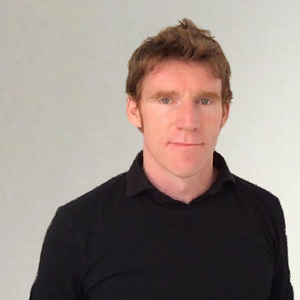
Ian O'Malley
$25/hr
Copy writing. Content creation. Development editing.
- Reply rate:
- -
- Availability:
- Hourly ($/hour)
- Age:
- 45 years old
- Location:
- Dublin, Dublin, Ireland
- Experience:
- 11 years
Magazine Article
Football - A day with the Ultras
“Football fans are getting
more and more violent and are
looking to attack the police.
There is a real risk this
escalating violence will have a
serious effect on the traditional
place of football in Italian life,”
according to a spokesman for
SISDE, the Italian police's
intelligence gathering unit:
Following a series of
incidents during 2004/05, Italian football is facing the new season with some
trepidation. On an infamous night during last season’s Champions League, Inter
Milan fans on the San Siro’s Curva Nord (north terrace) hurled more than 30 red
flares toward the AC Milan goal box. They injured AC Milan’s goalkeeper Dida and
forced the game to be abandoned.
This was the second time a referee was forced to bring a Champions League
match in Italy to a premature end. Roma’s group match with Dynamo Kiev was
abandoned after Swedish referee Anders Frisk was hit by an object thrown from the
crowd.
It is difficult to overestimate how important football is in a country where the
name of the ruling political party is ‘Forza Italia!’ a football chant meaning ‘Go
Italy!’ The Prime Minister Silvio Berlusconi is of course also in his spare time the
owner of AC Milan.
The core of this crisis in Italian football lies with the ultras. The ultras are
intensely loyal hard-core fans. They are well-organised and perpetrate orchestrated
violence that can exert huge influence over the way football clubs are run. SISDE
estimate there are as many as 60,000 ultras in Italian football and 10 per cent are
attached to far-right or far-left political groups.
The Italian newspaper La Republica reports, “In the curva you’ll find
professionals, the lawyers, the good son, the son of the politician, the bourgeoisie…”
For the purpose of trying to understand this blight of violence that is afflicting
Italy, why then not find a red-haired Irish man in the curva too?
The city of Padua is just a short bus ride south of Venice. Off one of Padua’s main
squares, there is a small monument with a quotation from Shakespeare’s The Taming
of the Shrew, “ The great desire I had to see fair Padua, nursery of arts, the pleasant
garden of great Italy… As he that leaves a shallow plash to plunge him in the deep
and with satiety seeks to quench his thirst.”
Like Shakespeare’s character, I have come to Padua to plunge myself in at the
deep end. I will attend Padua F.C.’s final game of the- Season against
Sambenedettese,
I need a guide to help me infiltrate the ultras. Daniela is a student just a few
months short of graduation with her Art History degree. And she is a fully-fledged
ultra. On the morning of the game she takes me on a tour of the city.
The main plaza of Padua Prato della Valle is, Daniela tells me, the largest square
in Italy. Santa Giustina is the ninth largest church in the world. The university is the
second oldest in Italy. Yet in a country of such historical abundance as Italy that is not
enough to impress. Padua gets few tourists and has the feel of a town just getting on
with its own business.
Padua football team has been largely ignored too. It was founded in 1910 and has
had almost one hundred years of mediocrity since. There are positives to this. Italians
are possibly the most self-aware nation on earth. They are always watching
themselves. The Inter fans knew the world of football was watching when they hurled
their flares.
At Padua’s Serie C match, I will probably be the only non-Italian. There will be
little or no media. I will have a better chance to get a sense of this fierce devotion or
campanilismo of Italian football fans in its unpackaged state. And as long as I stay
with her I shouldn’t get into too much trouble smiles Daniela.
We
visit
the
Cappella
degli
Scrovegni with Giotto’s
famous frescoes and
Daniela explains to me
the importance of the
match. Under a bluepanelled, starry heaven
of unfolding biblical
narratives, I learn that
Padua are in fifth place
in Serie C, over twenty
points behind Rimimi.
Above our heads there is
the first depiction of the star of Bethlehem as a comet, probably based on Giotto's
sighting of Halley's Comet in 1301. But of more immediate importance, Padua need
to beat Sambenedettese by at least two goals to reach the play-offs. If
Sambenedettesse win, they or Napoli (Remember them?) will take the last play-off
spot.
As we walk back outside through Padua’s gentle streets and squares, Daniela is
regularly saluted by, as I find out later, other ultras. She is well known around the
town.
Outside one of the expensive restaurants on Piazza della Fruta, the owner stops
Daniela and they talk about the match. When he hears I’m going too he taps his fist to
his chest proudly and introduces himself as Angelo.
The last high point in the Padua FC’s history was between 1994-96 when they
climbed into Seria A for two seasons. The guitar-playing, goatee-wearing American
Alexei Lalas was at the centre of defence. ‘You look like him,’ says Angelo.
I ask him how long he has
been an ultra. ‘All my life,’
he proclaims. ‘Any dangerous
experiences?’ ‘A few,’ he
says and points to a small scar
above his right eye. ‘What’s
the attraction?’ ‘Adrenaline,
danger, governing your fears,
your weaknesses. Getting
through the fight’
He kisses me on both
cheeks and promises us a
discount if we come back after the game.
The stadium is 5km from the centre of Padua. We drive out with two fellow
ultras, Giuseppe and Marco, tense and quiet in the back of the car. Surprisingly for
Italy, for anywhere, going to a football match, we don’t have to wait too long in
traffic. The stadium is not going to be full. Without the ultras of both teams, it would
be almost empty.
“There are fans who become violent because they have transformed the old spirit
of local pride into violence and those who try to influence the decisions of their club
with violence. There are those who are politicised and, finally, those who are not fans
at all but who mix with supporters in order to practice violence as an instrument of
political struggle,” declared the Interior Minister Giuseppe Pisanu in May. He warned
he would be prepared to close stadiums where trouble occurred.
Seasoned observers of Italian football insist they have heard such rhetoric before
only for decisive action to founder when confronted with the power of the ultras.
When the Inter-Milan match was abandoned there were few signs of outrage from
ordinary supporters. They seem to have grown wearily accustomed to their stadiums
being used as battlegrounds.
Just two weeks after the death of Pope John Paul, some 85 police were injured
during the round of Italian league matches. One journalist noted sardonically that the
only peaceful weekends in Italian football nowadays occur when a pope is mourned.
At the Stadio Olimpico in Rome Lazio fans displayed illegal swastikas and fascist
banners. The police took no action and Lazio were fined just £17,000.
After the Lazio-Rome derby, Mussolini’s granddaughter described her pleasure at
Paolo di Canio’s fascist salute to Lazio fans, ‘How nice that Roman salute was, it
delighted me so much.’ During a previous derby match, a rumour started by Roma
fans about police killing a disabled boy led to angry fans invading the pitch to
persuade captain Francesco Totti to call the game off. In the ensuing riot 150 police
were hurt.
Padua’s stadium holds 32,000. Daniela whispers to me that it was built on dirty
money for the 1990 World Cup. We are thoroughly frisked as we enter the stadium.
The caribinieri (police) disconcertingly touch my groin and buttocks, inside my socks
and shoes.
As we walk up the steps to the stadium, I feel that catch of breath in my chest, the
anticipation before a big game. Earlier Daniela brought me to the Palazzo della
Ragione, a hall of judgement where the judges’ specialist areas were indicated by
animal symbols on the walls. The stadium is our judgement hall. From the lofty
viewpoint of the stands we hand out commandments and scorn on the players like
gods. We are brothers (and sisters) together for this ninety minutes escape from life,
swapping verdicts on the game. It’s a well of conflict at a remove from our own lives,
yet passionate and beautiful. The beautiful game. The beautiful Italian game.
The stadium is a disappointment, shabby and dilapidated. There is an athletics
track distancing us from the pitch. ‘Do they have athletics meetings here?’ Daniela
shakes her head wearily to suggest that sometimes it’s better not to ask why an
athletics track is built into a stadium that never stages athletics.
There are maybe 1000 of us on the curva. It all seems quiet and peaceful for the
moment. At the far end of the pitch the Sambenedettese fans are a swaying mass of
black and red.
Many of the Padua ultras seem to be only vaguely interested in the ‘well of
conflict’ happening on the pitch. They refuse to sing for the first twenty minutes of
the match. They are protesting because a couple of weeks before some of their
number were banned from the stadium for three years for fighting with rival fans.
After a match against Parma, most of the leaders of Juventus’ ultras were arrested
for fighting on the pitch. However, new bosses immediately took their place. They are
now led by a man who was released after sixteen years in prison for murder. These
were part of the group determined to make their point against Liverpool in their
Champions League matches, responding to attempts at conciliation with raised middle
fingers.
“At the festival of friendship ignorance wins,” mourned Italian newspaper, La
Stampa.
Padua start the game brightly. They are the better team. Gianpietro Zecchin looks
lively up front. La Grotteria, unfortunate sounding name, is Daniela’s favourite
player. ‘Oh,’ I say politely. By the end of the game I still haven’t quite figured out
why.
Meanwhile, the ultras are smoking, drinking and chatting. Some of them have
their back to the game. They seem quite serene. They look like people I’ve seen
earlier walking around Padua’s placid streets.
After fifteen minutes Padua are hit on the break, a defensive lapse and they are
one down.
The ultras maintain their silence. There is a chant from the away fans that I don’t
understand.
Exactly on twenty minutes the Padua ultras finally they find their voices. Banners
are unfurled. A man standing alone at the front of the curva turns and I see what is
written on his t-shirt, ‘IRA- Undefeated Army’. He shouts at the away fans and points
at his t-shirt. “Dimi tutto! Tell me everything.” I have no idea what connection the
IRA have with a match in Italy’s third division but the t-shirt gives him authority
somehow.
‘I hate this man,’ says Daniela. ‘He is so…’ she searches for the word. ‘Arrogant.’
He is a bully. He is not the only one. Another man with a megaphone, wearing a
Burberry hat in tribute to recent fashion trends among English hooligans, everyone
into a tight group in the centre of the curva. Giuseppe and Marco get up. Giuseppe
shrugs and looks slightly ashamed. ‘We have to go.’ ‘Well, we’re not moving,’
Daniela says firmly and stays sitting beside me. Sometimes, there is an inner strength
in Italian women below the glamour and all the things that are initially attractive but
finally unsatisfying.
The man with the megaphone shouts and the huddled group of ultras chant in
reply. “Non vinciamo mai!” ‘We will never win!’ It’s amusing rather than
intimidating to see how content they are singing this with all their heart. At the same
time, their team goes two down. The ultras barely seem to notice.
Then my favourite chant of the match. ‘Non
guarda la partita, guarda di me! Don’t look at the
match look at me!’ screams the man with the
megaphone. Daniela puts her head in her hands in
embarrassment. I think of the Torre dell'Orologio
that she showed me earlier, with the astronomical
clock that dates from 1344. It is pre-Copernican
astronomy, with the earth at the centre and
everything else revolving around it. The strange
inversion of what we now see as normal, seems
appropriate.
Padua go in at half-time two down. They haven’t played badly. Apart from the
goals, a big apart from I know, Sambenedettese have hardly threatened.
As the players troop off, the ultras are screaming, “Vaite al lavoro! Go to work!”
Beer bottles are thrown over the glass barrier. One fan kicks it furiously. He knows
everyone is watching him. When the team has disappeared he walks quietly back and
puts his arm around his girlfriend.
It is said that leading members of the ultras know where the players, the coaches
and officials live. They have been known to use threats to achieve their aims. It was
noticeable, for example, how no Inter players came out publicly to condemn the
trouble during the Champions League derby.
The ultras carry real clout behind the scenes on the streets and terraces and freely
use it to enforce their political will. The police and stewards are reluctant to tackle
them and the club officials are in awe of a powerful bloc that can make or break
presidents and managers.
The ultras can shape transfer policy by rioting to prevent a signing, as with
Ronnie Rosenthal to Udinese in the ‘90s, or launching pre-emptive attempts to sign a
player, as when Lazio fans invaded a Parma training session to demand Lilian Thuram
signed for their club. They also turn up at their own training grounds to give mobhanded pep talks to players they think are not up to the job. They have left death
threats on smashed Ferraris.
At the beginning of the second half, the Padua ultras unfurl a huge banner and
tape it to the barrier with masking tape. It says that the coach must go, though not
quite so politely. What strikes me is how much time they must have spent preparing
it. Masking tape and markers and colouring in, at their kitchen table or their local bar.
Daniela tells me that the Padua fans are of ‘the right.’ The coach Olivera is of the
left.’ This is why they want him out. I have no idea what she is talking about. I didn’t
realise fans could be either right or left wing. Even less so a coach. Is Alex Ferguson
of the left or the right? I didn’t know. Suddenly I wanted it to be important for some
reason. It seemed nice to believe in concepts like that again.
Daniela points out a man to me across the curva. I can only see the top of his
head, but she tells me that he has all the history of Padua tattooed on one of his arms.
I never get to see it but as Padua is one of the most ancient cities in Northern Italy, a
Roman municipium from 45BC, I imagine he must have a long arm indeed.
In Italy no-one was surprised that flares, officially banned from stadiums, were in
abundance at the San Siro. Nor was there any shock that the stewards and police did
nothing to stop the wave of missiles. The curve are ultra territory. I can see, on a
smaller, less menacing scale here in Padua that the ultras operate in a ‘no-go zone’ for
police.
A group of caribbinieri in riot gear pass in line down to the left to take up
positions for the end of the game. The man in the IRA shirt strides menacingly
towards them. He raises his bottle of beer above his head. At the last moment he veers
away. It is all show. Smiling and triumphant he returns to the bosom of the ultras.
‘Crettino!’ mutters Daniela and for once I don’t need a translation.
With ten minutes to go, the man with the megaphone announces that we are all
leaving. ‘If you’re a real fan you’ll leave now.’ Daniela looks at me to say we are
absolutely not leaving. The curva empties around us.
The man with the IRA t-shirt stops. I don’t understand what he’s saying to
Daniela. Then he looks at me. He points at his shirt and makes a fist.
‘Are you sure you want to stay?’ I ask Daniela as he leaves. She nods defiantly.
Padua have two great chances to score in the last few minutes but it hardly seems
to matter. The ultras have already left the building. They are outside in a large group,
being eyed nervously by the caribinieri. They are waiting at the exit where the players
and officials will leave. We leave them to vent their frustrations.
Back in the city, Daniela thanks me for coming to watch her ‘silly little football
team.’ She looks sad and beautiful in the evening sun. I wish Padua the best for next
season but even she doesn’t seem to really care anymore. She has to go home and
study now. Within the next couple of months, she will hope to follow in the footsteps
of Elena Lucrezia, Padua and the world’s first woman university graduate. The rest of
the Padua ultras will return to their normal existences too in this quiet alluring city.
As I make my way to the station for the journey back up to Venice, the lion of St.
Mark, the symbol of the city, snarls at me from the top of a pillar above the market
stalls. It’s a reminder that although football is still a beautiful game, its violence as yet
remains tamed. Italian football is facing another tough year.