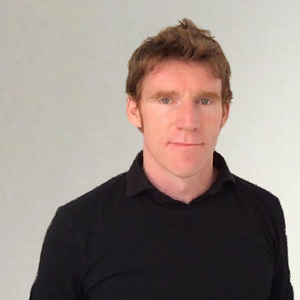
Ian O'Malley
$25/hr
Copy writing. Content creation. Development editing.
- Reply rate:
- -
- Availability:
- Hourly ($/hour)
- Age:
- 45 years old
- Location:
- Dublin, Dublin, Ireland
- Experience:
- 11 years
Policy Document
Goodwill Irish Forum Theatre
Empowering young people through dramatic arts and intercultural
experience
G.I.F.T. – Goodwill Irish Forum Theatre was set up through an Interreg bi-lateral
project in July 2001, between the Carlow County Arts office and Theatr Fforwm
Cymru.
Mission Statement
To advance the education of the public in Ireland and especially young people, in the
promotion and protection of good health in particular by participation in drama
associated visual and performing arts and intercultural exchanges. The aim is the
empowerment of young people through the dramatic arts and intercultural experience.
Directors:
Artistic Director: Aaron Camps
Directors: Garth O’Malley, Kieran Fitzgerald, Eoin Murphy, Siobhan Byrne, Connie
Byrne Hyland
Support:
The Goodwill Irish Forum Theatre is a “chapter” of Rehearsal For Reality and is
supported by Theatr Fforwm Cymru. G.I.F.T. is also affiliated to the “Drums for
Peace” Network and the European Network of Cultural Youthworkers.
WHAT WE HAVE DONE
Youth Arts Leadership Training
Workshops in acting and directing
7 Youth Exchanges in Wales, Ireland, Portugal, Denmark, Lithuania
Public Performances Street & Stage
Conference “Network for the Disability Database”
Conference “Democracy Commission” Liberty Hall, Dublin
European Forum Theatre Training for Trainers
Short film “Uranium Skies”
Performance in Educational video “Lifeskills for Teenagers”
Performance Tour of South East Ireland and Wales
-
International Youth Exchanges
Forum Theatre
Drama
Video
Film
Stage
Lighting
Drumming
Dance
G.I.F.T.
Goodwill Cottage, Knockbower, Nurney, Carlow. Contact:-
G.I.F.T.
Goodwill Cottage, Knockbower, Nurney, Carlow. Contact:-
G.I.F.T. Drama
Theatre/drama techniques predominantly influenced by the work of Augusto Boal.
(The overall name of this body of work is called “Theatre of the Oppressed.”) The
techniques within this body of work are always participative and include:
• Games
We find them invaluable as ice-breakers, for team building and encouraging cooperation, for increasing sensitivity of the senses, for kinaesthetic development, coordination, sequencing, etc.
• Forum Theatre
This type of theatre is used to highlight problems, so that “spectactors” can think of
solutions. It is a way of dealing with external oppression e.g. bullying or any other
type of damaging behaviour. It is the epitome of experiential learning, summed in the
old adage, I look and I see, I hear and I know, I do and I understand. It is also the
technique that we have found stimulates the most empathy.
• Image Theatre
This technique speaks for itself. It facilitates non-verbal expression. It works well
with all ages and particularly with people who find it difficult to articulate emotions
or experiences. It encourages understanding of body language and is summed up in
the saying “a picture paints a thousands words”
• Cops in the Head
A technique for identifying and dealing with negative “put-down” self talk. The
chance to recognise these “voices”, where they come from and the damage that they
cause. The chance to turn up the volume on positive self-talk.
Theatre in Education Projects
“Education is not the filling of a pail, but the lighting of a fire.”
W.B. Yeats
“Learning… that reflective activity which enables the learner to draw upon previous
experience, to understand and evaluate the present, so as to shape future action and
formulate new knowledge.”
“Learning makes sense: re-creating education for a changing future.”- J. Abbott
G.I.F.T. Projects provide personal development skills based on techniques from the
theatre world, to empower participants to deal with personal and emotional issues they
struggle with on a daily basis in their learning.
Aims
"Without emotions, there can be no joy, no motivation, no values. Emotions
are very powerful tools for learning".
This quote from the Times Educational Supplement is very close to our hearts and in
line with the philosophy of G.I.F.T.. However, we would also add that some
emotions are very powerful blocks to learning.
What is also evident is that many young people lack some basic understanding of
some of the potential negative behaviour patterns surrounding them. The most
2
G.I.F.T.
Goodwill Cottage, Knockbower, Nurney, Carlow. Contact:-
obvious being peer pressure, particularly the subtler and far more pervasive form
whereby "I" adapt my behaviour (often not to my advantage) in order to be accepted
and belong to the group. “English is impossible… Irish food is…”
Theatre/drama is the perfect tool to learn ways to manage the emotions that may be
hindering learning.
Our approach is very much the "no handout" approach, we make each workshop as
experiential as possible embracing the do review, learn and apply cycle of learning.
Lessons are also designed to be enjoyable, which, by the response
from pupils, they evidently are.
What is theatre-based learning?
Theatre engages our hearts and minds with unique immediacy.
Participants are stimulated to think and act in new ways. Rather than learning from the
book, people have tried and tested and retried the newly found skill within the safe
environment of the project- before adopting it on return to their daily lives.
ACT →
REFLECT
→
AWARENESS → CHANGE →
People ACT and experience different behaviours and their effects:
• they REFLECT on what this change means for them and to others;
• this brings an AWARENESS of their individual and group behaviour;
• from which a CHANGE occurs;
• being empowered to choose and adopt different behaviours and then ACT
• which they REFLECT upon….and so forth
The benefits every project brings are:
1. Technology for creative thinking
2. Fun and ability to use it to improve morale
3. Empowerment- enabling people to understand and act on their personal and social
values regarding issues which affect their lives
4. Insight, awareness and respect for the differences in other personal values
5. Performing skills
6. Development work on Emotional Intelligence
“School is a crucible and a defining experience. A child’s sense of self-worth depends
substantially on his or her ability to achieve in school.”
‘Emotional Intelligence’ - Dr. David Hamburg
“Anyone can become angry – that is easy. But to be angry with the right person, to
the right degree, at the right time, for the right purpose, and in the right way – this is
not easy.”
-
Aristotle
Contracts
We find it essential to start each session with an agreed contract. This is done to
clarify boundaries, work out what is acceptable behaviour and what is not and most
3
G.I.F.T.
Goodwill Cottage, Knockbower, Nurney, Carlow. Contact:-
importantly to create a safe space. Feeling safe is imperative if people are going to
work with emotions. Ideally the contract will include points such as:
•
•
•
•
•
•
The importance of listening to one person at a time.
Taking care of yourself and others, both physically and emotionally. Being
kind, no put downs or name-calling.
Confidentiality. No telling tales about what people have said.
Respect others, including acceptance of diversity etc.
Be honest.
Take personal responsibility.
• Own your own statements. Don’t generalize, stereotype or make sweeping
statements, e.g. “All boys are…”
Sessions times are negotiable and depend upon the time constraints of participants and
facilitators.
G.I.F.T. TRAINERS
Aaron O’Malley Camps – Project leader, facilitator
Educated from Trinidad to Tullow, Aaron holds a BA in Psychology and Philosophy
from University College Dublin. He has an extensive background in residential
socialwork with both young people and children, with training and experience in
Family therapy, Drama therapy and a diploma in counselling.
He has worked with the Trinidad and Tobago Tent Theatre as a performer with
responsibilities toward set, stage management, script and directing. Using his training
in carnival theatre and group therapy he has designed and facilitated team building
and training workshops for socialwork teams of the Health Boards and of the
voluntary sector both in England and Ireland. More recently he was employed by the
Carlow County Youth Theatre as the Youth Drama development worker to establish,
co-ordinate and train four youth theatres in Co. Carlow.
Ian O’Malley- Facilatator
Ian has a BA Hons Degree in History and English Literature, and an MA in Irish
Writing from Maynooth University. He has nine years experience in EFL, working
with students of many different cultural backgrounds from European to Asian to
African, agegroups from young teenagers to top level executives, and all levels of
English. He is currently Academic Director of Studies in Kenilworth Language
Institute. He has lived and worked abroad in Barcelona, Madrid and most recently in
Rome where he taught in the Italian parliament. He is a registered ACELS examiner
for the TIE exam.
He has taught film and wrote the script for a documentary on Oscar Wilde. He has
performed in national drama festival competitions with Maynooth Drama Society and
the Little Theatre, Carlow. With G.I.F.T. he has participated in street theatre and
foreign youth exchanges. Most recently he facilitated and led ‘Forum Theatre in the
classroom’ with large groups of foreign teenagers studying in Dublin for the summer.
4
G.I.F.T.
Goodwill Cottage, Knockbower, Nurney, Carlow. Contact:-
Background: Augusto Boal's Theatre of the Oppressed
The Theatre of the Oppressed (TO) was developed by Brazilian theatre director
Augusto Boal during the 1950'ps and 1960's. In an effort to transform theatre from the
"monologue" of traditional performance into a "dialogue" between audience and
stage, Boal experimented with many kinds of interactive theatre. His explorations
were based on the assumption that dialogue is the common, healthy dynamic between
all humans, that all human beings desire and are capable of dialogue, and that when a
dialogue becomes a monologue, oppression ensues. Theatre then becomes an
extraordinary tool for transforming monologue into dialogue.
*
Image Theatre uses the human body as a tool of representing feelings, ideas,
and relationships. Through sculpting others or using our own body to demonstrate a
body position, participants create anything from one-person to large-group image
sculptures that reflect the sculptor's impression of a situation or oppression.
*
Forum Theatre: In Forum Theatre a group in tandem with a professional
facilitator (known as the ‘joker’) creates and develops a performance around issues
that are of prime importance to their particular group. Using the Greek terms
"protagonist" and "antagonist," Forum Theatre seeks to show a person (the
protagonist) who is trying to deal with an oppression and failing because of the
resistance of one or more obstacles (the antagonists).
The joker then says to the audience we will do this again, and if you would do
something different than what the protagonist (not the antagonists) is doing, stand up
and yell stop. The protagonist will then sit down and the audience member is invited
forward to show their solution of the moment. Once the intervention is performed, the
audience invariably applauds, and the joker invites the audience to discuss the
proposed solution, and to offer even more solutions.
Forum Theatre is referred to in many different ways including Theatre for Living,
Theatre of Provocation, Theatre for Change, Theatre of Liberation, Theatre of the
Oppressed and Democracy Theatre. Recognized by the United Nations through
UNESCO as an official “tool for social change”, Forum Theatre is an enormously
beneficial and useful bank of innovative techniques.
5