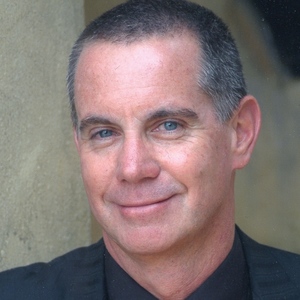
Mike Simpson
$25/hr
Copywriter, Content Writer, Editor, Copy Editor And Journalist
- Reply rate:
- -
- Availability:
- Hourly ($/hour)
- Age:
- 58 years old
- Location:
- Johannesburg, Gauteng, South Africa
- Experience:
- 25 years
Interviews
KUMI NAIDOO
KUMI NAIDOO
SA’s green
warrior king
Kumi Naidoo takes Greenpeace
International to new heights
D
urban-born Kumi Naidoo
does not mince his words.
In fact, he is outspoken,
opinionated and extremely critical.
At the same time, he is approachable,
thoughtful, calm and welcoming.
Perhaps it is these opposing characteristics
that made him so appealing to the board of
Greenpeace as it sought a global leader to take it
in a new direction, while at the same time continuing the traditional (and equally opposing)
strategies of engagement and confrontation.
Appointed as executive director of Greenpeace
International in November last year, Naidoo’s
arrival raised more than a few eyebrows. Not
only is he the first African and first ‘outsider’ to
take up the job, he is also a social justice activist
rather than an environmental one.
This, say observers, signals an acceptance
by the world’s most prominent environmental
organisation that critical concerns such as climate change can only be tackled by a holistic
strategy which also addresses poverty, disease,
unemployment and other social ills.
16 | www.leadershiponline.co.za
Naidoo himself is strongly focused on this
broad-based approach. “The moment we are
living in can be described as a ‘perfect storm’,”
he tells Leadership on a recent visit to South
Africa from his new base in Amsterdam.
“There’s been a convergence in a very short
space of time of a range of different global
crises: first there was the fuel price crisis;
then came the food price crisis; followed by
climate change. Next, there was the poverty
crisis and, most recently, the financial crisis.
All of these have hit humanity in the solar
plexus,” he says.
Apart from the obvious environmental impact,
Naidoo believes that climate change also constitutes the greatest challenge to future world
security, with the next wars and political and
social unrest likely to be caused by a scarcity
of water and other natural resources. One of
the ways to reverse this process is to alleviate
poverty and other social issues.
As he pursues these goals, the Rhodes scholar
and holder of a doctorate in Political Sociology is
not afraid to lash out at the world’s rich, powerful and well connected.
KUMI NAIDOO
KUMI NAIDOO
His commitment to
poverty and social
justice issues took him
to Zimbabwe in 2008
wherehe was involved in
making a video on the
plight of ordinary citizens
Global food and nutrition giant Nestlé gets a
brickbat for allegedly sourcing palm oil from
a supplier that contributes to Amazon rain
forest degradation.
Western governments engaged in the “war
on terror” are criticised for a response “which
has actually fuelled terrorism”.
G8 leaders such as former British Prime
Minister Gordon Brown and German
Chancellor Angela Merkel are rebuked for
viewing the lives of people in developing
countries as “dispensable”.
The Japanese government comes under fire
for what Naidoo believes is its heavy-handed
treatment of on-trial environmental activists.
Closer to home, he is scathing of Zimbabwean
President Robert Mugabe’s policies and the
starvation these have caused.
In South Africa, he blames a failure of “political
will” and “vested interests” for the government’s lack of enthusiasm for solar energy as a
means of bringing electricity to rural areas. He
even goes as far as to label the refusal to use
solar technology as “criminal”.
Yes, Naidoo is a man on an outspoken mission.
18 | www.leadershiponline.co.za
South Africa and Africa
South Africa has the dubious distinction of
being the only African nation among the 20
countries that emit nearly 90% of the world’s
greenhouse gases.
Naidoo says that a Greenpeace report, entitled
“The Energy Revolution”, shows South Africa
has an excessive dependency on coal and must
move toward a low-carbon future by investing
aggressively in renewable energies.
A core problem is energy inefficiency. “We
are one of the most wasteful and inefficient
countries – whether it’s the way we construct
our buildings, how they’re insulated, or the way
energy is transported,” he explains.
The report recommends re-evaluating local
building practices, and training construction
workers and tradesmen in techniques that
improve energy efficiency. However, the report
opposes any widespread use of nuclear energy
on the grounds that it is “too little, too late, too
costly and too unsafe”.
Naidoo is scathing in his criticism of the
Pebble Bed Modular Reactor nuclear project
at Koeberg in the Western Cape, which was
intended to boost Eskom’s power-generating
capacity, but now looks likely to be closed down
without ever coming on stream.
He claims that R20 billion was spent on the
seemingly doomed project (although other
sources put the figure at less than half of that)
and that the funds could have been better
spent on small-scale solar-powered projects
for rural communities.
A one-time student at the prestigious Oxford
University in England, Naidoo is particularly
animated on the subject of using solar power to
help meet the country’s energy requirements.
He believes that massive and co-ordinated
investment in small-scale and larger solar
projects would be a cheaper, faster, safer and
cleaner method of delivery.
But if that is the case, why are such solar
projects not already well under way in South
Africa? Naidoo claims it is due to a failure of
“political will”, and blames “vested interests in
the way energy is provided”.
“There are certain companies and individuals
in the power structure that have huge investments,” he says. “It’s criminal when we know
the technology exists (and fail to use it) and in
the process, we could have created jobs in the
rural areas.”
Greenpeace is already on record as saying
that South Africa can cut its annual greenhouse gas emissions by more than 200
million tonnes by 2050, without sacrificing
economic growth, if it uses energy more
efficiently and increases wind and solar
power production.
Looking at the continent as a whole, “The
Energy Revolution” report says there must be
a focus on promoting sustainable agriculture
in Africa and ensuring that small farmers are
supported in ways that promote food generation
without harming the environment.
Similarly, the continent’s oceans and coastlines need to be better protected in order to
regenerate depleted fish and marine life.
“Africa has a large coastline and, ultimately,
we would like to see about 40% dedicated to
marine reserves – otherwise our children
will never eat certain types of fish that we eat
today,” Naidoo says. “African coastal waters
are being impacted by commercial fishing
trawlers from all over the world, and we need
to defend that.”
He adds – enigmatically, and refusing to give
details – that several Greenpeace-owned ships
are to be deployed off the African coast in an
effort to “block some of the trawlers that are
killing our oceans”.
For the first time, South Africa is well positioned to heavily influence environmental
issues throughout Africa. It has achieved global
relevance through membership of the so-called
“Basic” group – Brazil, South Africa, India and
China. Together, these countries form an influential bloc of large developing nations that are
seeking a common position on emissions cuts
and climate aid.
Naidoo voices the hope that South Africa will
not look at global climate negotiations from a
perspective of self-interest, but rather advance
the interests of Africa as a whole.
Growing up in South Africa
His critical stance on South African government policies relating to solar power, nuclear
technology and Zimbabwe are particularly
interesting, given his background and ties
to the ANC. Naidoo was as an anti-apartheid
activist and exile in the 1980s, and subsequently returned at the start of the ‘90s to
work on the legalisation of the ANC.
But he never accepted roles in the government, despite being offered them, and preferred
to work in the non-governmental organisation
(NGO) and civil society arena.
Naidoo’s path to political and social awareness began while growing up in the then
Indian township of Chatsworth on the outskirts of Durban. Even as a youngster, he
gazed through bus windows while riding
through ‘white’ areas and noticed the immaculate condition of their schools, in comparison
to the dilapidated state of the one he attended
in Chatsworth.
He recalls that on the odd occasion when a
movie was shown in the school hall, power
would need to be run from the nearest house
because the school lacked electricity. “Every 15
minutes or so, somebody would have to run out
and reconnect the cable because somebody had
tripped over it,” Naidoo says.
www.leadershiponline.co.za | 19
KUMI NAIDOO
Did he have a deprived upbringing? “My dad
was a bookkeeper, and very hard working; he
built our house up until it was quite good in
the township context,” he remembers. “We had
three meals a day and I never felt I was poor.
“But when I look at it in global terms, we were
lower middle-class, at best.”
By the time Naidoo was 15, the reality of living
in South Africa in the ‘80s had caught up with
him. As the national student boycott gained
momentum, he became a school leader and
joined the many marches of the time.
He admits that he “didn’t understand everything that was happening”, but remembers
with a laugh how those at the front of the march
the country with eight other members of
Umkhonto we Sizwe.
“Lenny was a very philosophical guy,” Naidoo
remembers. “In my last conversation with
him, before we both fled into exile in different
directions, he asked me: ‘What is the biggest
contribution you can make to the cause of justice and humanity in South Africa?’. I said: ‘Your
life.’ But he said it was the wrong answer: it was
‘giving the rest of your life’.
“He was saying the struggle for justice is a
marathon and not a sprint, and the biggest
contribution anyone can make to the cause
of humanity is committing to a lifetime of
involvement,” adds Naidoo.
“Catastrophic climate
change is not inevitable”
would be chanting “We want equality” while
those further back had amended it to “We want
a colour TV”.
Another favourite slogan of the time was: “You
pay our teachers peanuts – no wonder they give
us monkey education”.
At that time fired by political awareness,
Naidoo went on to study Political Science at
the University of Durban-Westville, graduating
cum laude in 1985.
But the following year, the State of
Emergency was introduced and he was
arrested several times for violating provisions against mass mobilisation and civil
disobedience. Police harassment forced him
underground and he eventually left for Britain
to study for a Rhodes Scholarship.
“My break was getting the scholarship,”
Naidoo says. “I didn’t understand the significance at the time, as I was on the run. It was
only later I realised how prestigious it was.”
Past Rhodes scholars include former United
States President Bill Clinton, and former
Australian Prime Minister Bob Hawke.
It was while at Oxford that he learnt his best
friend and fellow activist Lenny Naidu had been
killed by security forces. A member of the ANC
and its military wing, he had fled to Swaziland
and was ambushed while attempting to re-enter
20 | www.leadershiponline.co.za
His ‘involvement’ has taken the path of
developing South African civil society and its
institutions. He has been executive director of
the South African National NGO Coalition; a
board member of the Association for Women’s
Rights in Development; chief executive
officer of Civicus: World Alliance for Citizen
Participation; and co-chair of the Global Call
to Action Against Poverty.
Naidoo’s commitment to poverty and social
justice issues took him to Zimbabwe in 2008
where, undercover with his stepson, he was
involved in making a video documentary on
the plight of ordinary citizens.
He was so moved by what he found that, on
his return, he embarked on a 25-day fast to protest against the Mugabe government and raise
awareness of the starvation facing ordinary
Zimbabwean citizens.
It was while on day 19 of his fast that Naidoo
was approached to take up the role of global
head of Greenpeace. He takes up the story: “I
was feeling rather weak and wondered if I was
really up to the challenge of such an important
role. I also wondered whether it was too soon to
leave the work I had become so involved in on
behalf of the poor.
“When I later told my daughter, she said that
she would never talk to me again if I did not
seriously consider the offer. She also pointed
out to me that Greenpeace has always worked
for the poor, just in a different way. For her,
Greenpeace and its supporters are the real
activists, the real heroes who dedicate their
lives to the struggle for climate justice,”
Naidoo recalls.
Global issues
Little more than six months into the job, Naidoo
admits that it has not been easy. “I knew my
learning curve would be steep because I’m
not your conventional environmentalist, but I
have to say that is significantly steeper than
I thought it would be. [But] I get very excited
about all the learning.”
His experience in civil society and justice
issues has not gone to waste, though. While
one part of the Greenpeace strategy seeks
constructive engagement as a way of advancing environmental causes, the other is to
engage in non-violent confrontation and acts of
civil disobedience.
Naidoo’s feet were hardly under his new desk
in Amsterdam when he had to oversee efforts
to secure the release of Greenpeace activists
who were arrested in Denmark for breaching
security at an international Heads of State
dinner during the Copenhagen Summit on
Climate Change.
Similarly, he has been to Japan, where activists
face up to 10 years’ imprisonment for activities
intended to bring a halt to whaling by Japanese
ships. Greenpeace says the charges are politically motivated and adds that the activists are
“political prisoners”.
The organisation intends continuing with such
acts, so it is likely that Naidoo’s past talents will
continue to be put to good use.
Overall, he is upbeat that all is not lost on
the environmental front. “Catastrophic climate
change is not inevitable. We have an opportunity
through our creativity and our activism to push
for a green economy that creates sustainable jobs;
we need to pursue an energy revolution which
seeks to promote the use of renewable energy
such as wind and solar power and increased
energy efficiency.
“If we are able to harness all of these opportunities,
we can address the issues of poverty, job creation
and protecting the climate simultaneously,”
adds Naidoo. ▲
Mike Simpson