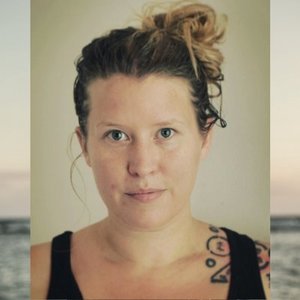
Inge Snip
$18/hr
Copywriter & Multimedia Journalist
- Reply rate:
- -
- Availability:
- Hourly ($/hour)
- Age:
- 41 years old
- Location:
- Tbilisi, Tbilisi, Georgia
- Experience:
- 10 years
Old buildings new uses
11/3/2017
Investor.ge
Issue 4, 2017. August-September
NEW FUTURES FOR GEORGIA'S ABANDONED BUILDINGS
Architects and entrepreneurs are turning old, empty buildings into new ventures, business hubs and hotels.
Inge Snip
For over 20 years, Kutaisi's former pride - the automobile plant employing over 15,000 people in Soviet Union mes - had been
le abandoned. The structures of the factory buildings and warehouses were s ll standing, although most of the buildings had
missing roofs and windows.
But when the Chinese investment firm Hualing Group bought the 36 hectare plant from the government in a priva za on auc on,
they were determined to keep the place's history alive.
"I'd personally rather have something like Dubai," General Manager of the Hualing Group Josef Nibladze admits during our
interview at the firm's other project, the Chinese City at the edge of Tbilisi Sea. "But the renova on work has been really
impressive."
Hualing Group bought the plant to create a free economic zone in Kutaisi, and a er opening its doors in 2015, it currently is the
fastest-growing free economic zone of the four in the country.
But the former automobile plant in Kutaisi is not the only example Georgia has seen of an old Soviet factory being repurposed into
something new.
http://www.investor.ge/article_2017_4.php?art=10
1/4
11/3/2017
Investor.ge
"History and the story ma er"
The most visible and popular transforma ons have that been of the Adjara Hospitality Group, which started out by transforming
former hotels to new hotels, first with Holiday Inn - a former hotel in which Internally Displaced People lived a er the conflict in
the 1990s - and then an old sanatorium - spa - in Kazbegi. Soon the group was completely remodeling a former publishing house
in Tbilisi into a hotel.
"We try to buy old buildings with a history, and not start from scratch," says Levan Berulava, the general manager at Rooms Tbilisi.
"We believe history and the story ma er. And we hope others will follow us in preserving history by keeping the buildings' stories
alive."
And with their latest project, transforming an old sewing factory in a run-down old residen al area into a cultural and crea ve hub
with workshops, bars, cafes, and a hostel, their work is being no ced.
http://www.investor.ge/article_2017_4.php?art=10
2/4
11/3/2017
Investor.ge
Growing trend
Georgian architect and urban designer Anna Kintsurashvili says the work of the Adjara Hospitality Group is se ng a trend, albeit
small, in adap ve reuse that she hopes others will follow. "We can argue about how well the Holiday Inn was done,"
Kintsuarashvili tells Investor.ge over the phone, "but their work with Fabrika and Rooms is impressive."
Adap ve reuse is a common global process whereby old sites and buildings are being transformed and/or reused, o en targe ng
industrial sites as ci es grow and manufacturing moves to the outskirts of the city.
But Georgia, with its vast amount of "forgo en" industrial sites that were looted during the so-called dark 1990s, has seen an
increase in the new construc on instead of renova ng the exis ng buildings, Kintsurashvili explains. "The architects are lazy, it's
much easier to break something down and build something new, than to renovate an old building," she says.
She adds that construc on companies o en cite old, Soviet standards for housing, arguing that the exis ng buildings are older
than they were planned to be, and are now dangerous. "That's o en not the case; just some simple things need to be replaced,"
Kintsurashvili says.
Architect and CEO at IDAAF Architects, Nanuka Zaalishvili, agrees with Kintsurashvili, but notes that ci zens' growing
http://www.investor.ge/article_2017_4.php?art=10
3/4
11/3/2017
Investor.ge
understanding of the importance of the country's Soviet legacy means it is not as easy to tear down buildings as it used to be.
Together with her team, Zaalishvili, who founded the architectural legacy-oriented online magazine IDAAF, has specialized in
adap ve reuse by reinforcing old structures and adding new structures to extend spaces. "When we study an old building, we first
ask what the value is, the historical legacy," Zaalishvili tells Investor.ge.
The young architect and her team have been selected to preserve, renovate, and find a solu on to reuse the old Soviet mosaic
monument on the military highway to Kazbegi. And the team is pu ng all its efforts to keep the mosaic in the forefront, making it
more accessible to people with disabili es, and develop a small cafe - which will blend in - for visitors to rest next to the mosaic.
Preserving Soviet-era structures - like factories and monuments - is both important and prudent, notes Mate Zosiashvili, senior
execu ve investor rela ons at the Hualing Kutaisi free industrial zone.
"Soviet structures and construc on are very strong and solid," he tells Investor.ge at the former automobile plant that they are
transforming into a useable site for factories, trade companies, and manufacturers.
"We need to use all of the aspects of our history to build a new and be er future," he adds.
http://www.investor.ge/article_2017_4.php?art=10
4/4