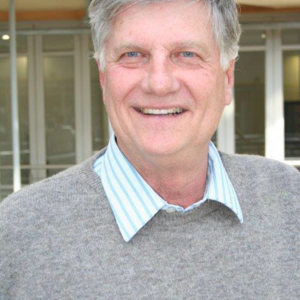
Bruce Edwards
$30/hr
Speak, write & read English fluently (C2 level). Work/teach online 20hours/week.
- Reply rate:
- -
- Availability:
- Hourly ($/hour)
- Age:
- 70 years old
- Location:
- St Francis Bay, Eastern Cape, South Africa
- Experience:
- 40 years
Name of the Teacher
Bruce Edwards
Date
1/11/2025
Level of the class
Length of lesson
Secondary School Spanish Students [S’s] 60 minutes
12-13 years old around 7-8 Grade
Topic: Scenario 2 Content lesson on Photosynthesis and Non-Animal Kingdoms to]
Learning Outcomes:
At the end of this lesson, most students will be able to:
1. Identify what the difference is between vascular [bryophytes] and non-vascular plants [tracheophytes]
2. Understand the role of plants in Photosynthesis
3. Draw a diagram, whose labels contain a sort message about photosynthesis & global warming.
Materials PowerPoint, interactive games, [S] handout texts on photosynthesis and urban greening as well as carbon and oxygen cycles to supplement the
course book page and enable recommendations.
Content:
[S’s] will be able to…
1. Identify and confidently use the language of “The Plant Kingdom” as it
relates to the classification of plants
2. Explain how plants produce oxygen and absorb carbon dioxide
3. Summarise information on plant classification and photosynthesis and
explain how photosynthesis can help combat global warming
Communication:
[S’s] will learn, use, and have to understand the following:
• Language of (Key Vocabulary):
(Words for input)
Photosynthesis: stomata; mosses; ferns; autotroph; chloroplast; vascular tissue;
non-vascular plants; bryophyte; tracheophyte; carbon dioxide; glucose; oxygen
• Language for:
(Additional language needed)
Words for describing process and interrelationships as well as, identifying
advantages and disadvantages together with; explaining relationships and making
recommendations
• Language through:
(Sentence stems for task (if applicable) and output)
pg. 1 Lesson Plan 150823
They are autotrophs which means…” Through Photosynthesis plants produce….”
The cause is… because….” the effects are…. As a result of… this means that…”
Cognition: (*remember to include the Bloom stages students will be using)
Culture:
1. Understanding and identifying the interrelationship between two different
plant phyla and the process of photosynthesis
1. Recognise the central role of plants in sustaining life through the
carbon/oxygen cycle
2. Evaluating: Compare whether bryophytes these two different phyla have a
materially different impact on oxygen generation and carbon dioxide/carbon
storage
2. Reflect on how human activities disturb this balance.
3
Summarising: Present findings explaining how photosynthesis combats
global warming
3. Propose simple community actions that support environmental protection
and urban greening.
Assessment Criteria: [S’s] should be able to link their understanding of the carbon /oxygen cycle to the need for advocacy and action in the greening of their
neighbourhoods.
And recommend actions to promote plant preservation and carbon reduction in their local environment.
Stage Name Time
Interaction Teacher’s procedure
Pattern
Students will…
Introduction & 5 min
recap
(Knowledge)
T-S, S-T
Play
a
game
sourced
at Interactive game
https://www.wordwallnet to highlight (Wordwall):
key points from the previous lesson and
lay the foundation for this lesson’s
recommendation from [S’s] s
pg. 2 Lesson Plan 150823
Welcome the class, check mood, review key points
from previous lesson.
Materials
Activating
knowledge
5 min
Input (Guided 5 min
Reading)
T-S, S-T
Display a slide with 5 sections arrange clockwise [S’s] describe, in short sentences, what Slide, video (Nat Geo or
from the Marsh Marigold to its leaf cross-section, they see on the slide in relation to the course book visual)
its mesophyll cell cross section small and large, photosynthesis cycle.
and back to the Marsh Marigold
T-S, S-T, S-S
Read aloud the section “The Plant Kingdom” and “How Read and answer questions about Course
book;
do plants produce food?” Encourage comprehension photosynthesis and plant classification.
PowerPoint on the
interactive whiteboard
questions (2.1, Q1–2). Class read the text together
[IAW]
and answer questions set alongside the text
applicable to that section viz. 2.1 and questions 1
& 2 under the section in the course book page 19
Task
(Collaborative
Work)
15 min
for two
texts
S-S, S-S
Divide class into Blue Team (bryophytes) and Red
Team (tracheophytes). Each pair identifies vocabulary
and information about their assigned group.
[S’s] in both teams are given thinking time to review
the answers prepared at the activities [T] has set
under this task. Then each blue team partner is
allocated a red team partner to complete, compare,
discuss, and summarise information to their new
partner.
pg. 3 Lesson Plan 150823
Identify defining features of each plant Handouts and slides
type. [S’s] compare findings with a partner from course book text
from the other team. Discuss differences
using [T’s] guided prompts on the
PowerPoint slide.
• 5 pairs of [S’s] in the blue team,
working in pairs, read and identify all
of the words that inform their
knowledge of Bryophytes and prepare
answers
• While 5 pairs of [S’s] in the red team
identify all of the words that inform
their knowledge of Tracheophytes
and prepare answers
• Teams now compare their answers
with a different pair. They tell a [S]
with a different text about their text
using the slide [T] provided as a guide
for their comparison discussion
5 min
Checking
understanding
T-S, S-S, S-T
[T] facilitates the groupwork
Output
15 min
T-S, S-T, S-S
Lead discussion summarising how photosynthesis [S’s] Draw and label a diagram of Handouts, paper, online
helps combat global warming.
photosynthesis, adding one sentence resources
explaining its environmental benefit. read
Extra Activity
5 min
S-S
[T] Extends learning with real-world examples of [S’s] are encouraged to peer correct Online resources
urban greening or reforestation to enhances [S’s] mistakes
understanding.
Evaluation
5 min
T-S, S-S, S-T
Conclude with a short quiz or game assessing content [S’s] are encouraged to play the game so Wordwall or interactive
to establish what [S’s] understand and know; and what that [T] can evaluate their knowledge
board set up around
they are still unsure of
[S’s] understanding of;
[1] Plant classification
and
[2]
How
photosynthesis can help
combat global warming
(Creative
Application)
[S’s] create true/false statements to Interactive quiz game
test each other
and comment on a [T’s] summary;
Lesson Rationale - words):
Cover the below points:
1.
2.
3.
4.
5.
6.
why you have structured the lesson in the way that you have
what each activity will contribute towards the learning aims and how this will be achieved
other activities that you considered including and why you chose not to use them
what you would do if any of your activities didn’t work in the way you have planned.
anticipate difficulties both in relation to the learners and their L1/age/level and to the content
provide relevant solutions to the anticipated difficulties by highlighting support/scaffolding offered in the lesson.
1 [T] structured the lesson this way because this CLIL lesson integrates science content and English language learning through a progressive structure that mirrors
the cognitive stages of learning—from activation of prior knowledge to application and evaluation. The lesson begins with an engaging review to recall relevant
vocabulary and concepts from previous lessons. This establishes a familiar linguistic foundation, especially for bilingual learners transitioning between L1 (Spanish)
pg. 4 Lesson Plan 150823
and L2 (English) scientific terminology. The sequence follows a clear learning arc: engage → explore → explain → extend → evaluate, which aligns with both Bloom’s
taxonomy and CLIL pedagogical stages.
The initial interactive Wordwall game serves as both a diagnostic and motivational tool, reactivating students’ existing knowledge while introducing the lesson theme
in a playful manner. The subsequent visual task—describing the Marsh Marigold diagram—stimulates curiosity and activates key vocabulary through multimodal
input, bridging visual and linguistic processing.
Guided reading of the course book text ensures learners access authentic content input while supported by teacher scaffolding. Pair and group tasks that follow allow
students to manipulate language actively, engaging in classification, comparison, and synthesis—all essential cognitive operations for content retention in bilingual
contexts. The final creative output task consolidates conceptual understanding through visual representation and written explanation, fostering deeper
comprehension.
2
Activities contributed in stages as follows:
• Introduction & Recap: Reinforces vocabulary retention and primes students for new input.
• Activating Knowledge: Connects prior understanding to new content; and encourages descriptive language use.
• Input Reading: Develops content comprehension and reading fluency; introduces key scientific lexis.
• Collaborative Task: Promotes peer interaction and communicative competence while applying classification skills.
• Checking Understanding: Encourages self-assessment and peer teaching; reinforces scientific accuracy.
• Creative Output: Applies conceptual knowledge to real-world contexts (linking photosynthesis and climate change
• Evaluation: Provides feedback loop for both content mastery and language use
pg. 5 Lesson Plan 150823
3
[T] considered integrating games throughout the entire lesson, however, it was determined that too many interactive activities might fragment the learning flow. Instead,
strategic placement of games (at lesson start and end) balances engagement, with focused academic reading, and discussion. An outdoor plant scavenger hunt was also
considered, but excluded, due to time constraints, and logistical challenges within a 60-minute period.
4
If the recap using the course book page did not work [T] would consider If the reading or classification task proves too linguistically demanding, [T] would simplify the
text using a bilingual glossary and rephrase complex sentences in accessible English. If the course book recap does not elicit sufficient participation, an image-based quiz
(using real plant visuals) would be substituted. For students struggling with the diagram output, sentence stems and model examples will be provided.
5
Spanish [S’s] 12-13 years of age may face several challenges; including Pronunciation difficulties with scientific terms (e.g., chloroplasts, tracheophytes); Conceptual
confusion between “vascular” and “non-vascular” due to L1 interference; Difficulty expressing cause-and-effect relationships in English; Uneven participation during
group tasks
6
To address pronunciation challenges, the teacher will employ choral repetition and phonetic reinforcement. Students will engage in hands-on vocabulary building,
such as labelling diagrams and assembling plant structure models to reinforce terminology. Simplified bilingual definitions and concept-mapping exercises will help
bridge the conceptual gap between L1 and L2 understanding. Sentence stems (“Because plants absorb CO₂, they…”) and visual prompts will scaffold scientific
reasoning in English. Mixed-ability pairing ensures peer support, while games and diagrams sustain motivation. In sum, the lesson scaffolds
understanding from comprehension → communication → cognition → culture, achieving both language and content outcomes.
Bibliography (if needed):
1 Course book at through www.burlingtonbooks.es/natural1 https://burlingtonbooks.es/catalogue-level/adults/ and accessed
at https://bbresources.s3.amazonaws.com/sites/3/NaturalScience1_DEMO_SB-U3_11185.pdf
2 National Geographic, https://images.nationalgeographic.org/image/upload/v-/EducationHub/files/photosynthesisinfographic.pdf
3 National Geographic, Photosynthesis, https://education.nationalgeographic.org/resource/photosynthesis/
4 Primary Theme Park, Photosynthesis for Kids, https://www.primarythemepark.com/2015/02/photosynthesis-kids/
5 Photosynthesis & Worksheets, https://za.pinterest.com/pin/-/
pg. 6 Lesson Plan 150823
6 Wordwall, The easy way to create your own teaching resources, https://wordwall.net/
https://wordwall.net/resource/-/what-activities-cause-water-air-or-soil-pollution
Materials (include all physical copies of the materials you plan to use in your lesson, referenced):
pg. 7 Lesson Plan 150823
pg. 8 Lesson Plan 150823