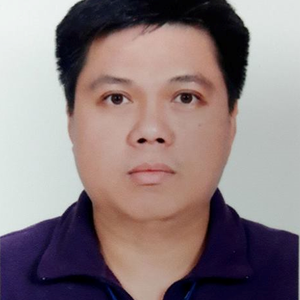
Arjyh Romero
$10/hr
Engineering & designs, data gathering & analysis, presentation, reporting, illustration & charts
- Reply rate:
- -
- Availability:
- Full-time (40 hrs/wk)
- Age:
- 48 years old
- Location:
- Cebu City, Cebu, Philippines
- Experience:
- 17 years
Conducting a training & imparting knowledge to colleagues
Extracted from ISO/TS16949
Process Approach
Internal Auditing
Prepared by:
Arjyh Romero
Date:
Nov. 5, 2007
Report No./Rev.:
Confidential
Report Contents
Session 1 – Introduction to Auditing
Session 2 – Audit Overview
Session 3 – Process Approach
Session 4 – Audit Core Tools
Introduction to Auditing
What is Audit:
- A “Check and Balance” process to ensure activities are
performed in an appropriate manner
- Usually conducted on an independent basis.
- Objective evidence is required
(like “the action”, “the words they say”, etc..)
Formal definition of an Audit:
- A “Systematic, Independent and documented process for
obtaining audit evidence and evaluating it objectively to
determine the extent to which audit criteria are fulfilled”
Source: ISO-
Introduction to Auditing
Internal Audit:
There shall be:
* Planned intervals; annual plan of Audit
* Audit Criteria, Scope, Frequency and methods shall be defined
* Auditors shall not audit their own work (independence of Auditee)
* Documented procedures
* Action are taken without undue delay
* Follow-up on actions taken and record results
* Cover all shifts
* Internal Auditor Qualifications (knowledge on ISO requirements)
Introduction to Auditing
Types of Audit:
* Quality Management System Audit
- The Organization shall audit it’s Quality Management system to
verify compliance compliance with this Technical Specification and
any additional Quality Management System requirements.
* Manufacturing Process Audit
- The Organization shall audit each Manufacturing Process to
determine it’s effectiveness (Control Plan)
* Product Audit
- The Organization shall audit products at appropriate stages of
production and delivery to verify conformity to all specified
requirements, such as product dimensions, functionality, packaging
and labeling, at a defined frequency.
Introduction to Auditing
Purpose of Conducting Audit:
* Looking at the over-all process
* Auditing for conformity
* Auditing for effectiveness (achieving the set goal/target)
* Approving Suppliers/Subcontractors
* Assessing for certifications
* Investigating problems
* Ways of Improving
Introduction to Auditing
Common Internal Audit Failure:
* Perceive audit as waste of time
* Incompetent auditor selection process
* Lack of proper system to train auditors
* Inadequate process to evaluate ability to perform audit
* Over-reliance on QC department
* Poor auditor judgment leads to lack of confidence in internal
audit result
* See auditors as fault-finder or trouble-maker
Audit Overview
Typical Internal Audit Cycle:
Planning the Audit
Conducting the Audit
Reporting the Audit
Corrective Action and Follow-up
Process
What is a Process:
- Set of interrelated or interacting activities which Transforms
Inputs into Outputs.
What is a Process Approach:
- For an organization, there may be numerous inter-linked
process.
- The systematic identification and management of the various
processes and the interactions between such processes may
be referred to as “Process Approach” to management.
Process
Model of Process Based QMS
Continual Improvement of the
Quality Management System
Customers
(and other
Interested
Parties)
Customers
(and other
Interested
Parties)
P
Management
Responsibility
D
Customer
Requirements
Measurement
Analysis
Improvement
Resource
Management
Product
Realization
Product
A
Customer
Satisfaction
Output
C
Manufacturing – Transformation of raw materials to Product
Product Realization – Transformation of Customer requirements to Customer Satisfaction.
Process
Functional Vs. Process Approach
Customer
Functionality Thinking
Priority: to meet
Functional objective
Customer
Process Thinking
Priority: to meet
Customer needs
Process
Auditors Perspective:
* Each Customer Oriented Process in detail is complex and
involve many sub-process performed by various functions
of the organization
* Some of these sub-process do NOT have direct interface with
the customers
* Depending on the nature and organization perspective, these
process can be classified as Support and Management
process.
Process
Types of Processes:
Organization
Management Process
Input
Customer
Customer Oriented Process
Output
Support Process
Process
Types of Process Examples:
Support Process Examples
Management Process Examples
Database Management
Capacity Planning
Maintenance
Business Planning
Internal Audit
Project Management
Management Review
Supplier Management
Training
Material Planning
Tooling Management
Manpower Allocation
Document Control
Process
What To Look For:
3 Aspects
Improvement
Effectiveness
Conformance
Process
What To Look For:
1. Conformance
What should
be done
What is
actually done
* Conformance is the basic principle
* Compare the actual activity against the audit criteria
Process
What To Look For:
2. Effectiveness
- Effectiveness of a process is shown by the result it achieved
with the delivered output.
- Hence, auditors shall look at indicators/measurable metrics
to tell if customer requirements are met.
Process
Delivery
Production
Inspection/test
Planning
Metrics
On Time Delivery (OTD)
Yield, Utilization, Cycle Time,
Cpk, PPM, DPMO
Defect Rate, Pass Ratio
Delay, Progress vs Plan
Process
What To Look For:
3. Improvement
- Look for trends
- Compare current results against past result
Daily DPMO for Line:____-
2
3
4
5
6
7
8
9
10
11
12
13
14
15
16
17
18
19
20
21
22
23
24
25
26
27
28
29
30
31
Process
Process Analysis:
* Every Process has these characteristics
- Process Owner(s)
- Process is defined and if appropriate, documented.
- Process linkages/interface of the process are establish
- is monitored to tell the performance and is improved if
needed
- has records to show as evidence
Process
Audit by Process Approach:
How?
(Method, Technique)
Input
With What?
(Equipment, Material)
With Who?
(Skill, Training)
Process
Output
What key criteria?
(Measurement, Assessment)
Other then Input and Output, Auditor should look at “Who Does What”,
“With What”, “How it is Done” and “Key Criteria Measured”.
Process
Question Auditor Should Ask:
* Who is the Process Owner? (P)
* What is the Purpose of your Process? (P)
* What are the inputs to to your Process? (D)
* What are your Process Outputs? (D)
* What type of Process are you Working on? (D)
* What are the Important Process Parameters? (D)
* What do you Measure about your Process? (C)
* What do you do with this Measurements? (A)
Note: Guide/Pattern in Developing a Checklist (follow the PDCA cycle)
Process
What Auditors Need to Look at?:
* Auditor need to look at the process from different aspects and ask
the essential questions.
What is the Objective?
Process Objective: the
Means to measure the
Process effectiveness
What is the process
Purpose, the intention
Of the Process
Input
What are the inputs,
Resources required
Before the Process
Can begin
Process
Output
What is the end product,
Service delivered upon
Completion of the Process
* How is it Monitored and Measured?
* Is it Effective? Is it Efficient?
* Do the result meets the Objective
Conducting an Audit
Audit Plan and Contents:
* Audit Planning should include the following activities:
- Identification of Process based on Quality Management System
Documentation and any additional information provided by the organization
- Analysis of the Process according to the criteria
* Products and/or service provided to the customer
* Risk to the Customer
* Interfaces (Inputs/Outputs)
* Possibilities to Group process for economical and effective audit
- Prioritization of audit activities considering
* Follow-up issues of prior audits (external/internal)
* Customer complaints
* Value (add) to audited organization
- Finalization of Audit Plan including sequence/process steps, timing and
interview partners.
* Objectives of Audit; Audit Scope, Documents required, Persons you
want to see and timetable of events.
Conducting an Audit
Collecting and Verifying Information
Methods include:
Question
(Ask them what they do)
•Interview
•Observe activities
•Review Documents
Audit Triangle
Observe
Check
(See what they actually do)
(What the procedure says
That they should do)
Note:
For a smooth flow of audit an
Audit check is necessary
Conducting an Audit
Where to look for information:
* Observe activities and surrounding work environment
* Examine records
- Inspection/Test reports, meeting minutes, result of measurement
* Ask for documents
- Objectives, Procedures, Plans, Instructions, Specifications,
Drawings, etc..
Sampling:
* Sampling cannot be statistically significant
* Select examples such as: (product model, part number, etc.)
* Follow Audit Trail, using the example to provide you with evidence
of conformance to the Standard
Process
Key points for Interviewing:
* Who do we audit?
- the person responsible for the activity to be audited
* How to begin?
- ask the auditee to explain/describe the activity
* When?
- during normal working hours
Key points for Interviewing:
* Ask Open Questions (not answerable by “Yes” or “No”)
- Encourage the Auditee to talk freely
- Use What, Where, When, Why, How and Who? (how is the best question)
* Probing Questions (Investigative Questions)
- Follow-up questions or focusing on more precise details.
* Closed Questions (answerable by “Yes” or “No”)
- Used where you want a clear answer “Yes” or “No” and don’t forget the
Please Show Me
Audit Core Tools
Relations of Core Tools
Feasibility
Review
Contract
Review
APQP
Phase 1
APQP
Phase 2
APQP
Phase 3
APQP
Phase 4
Planning
Product
Development
Process
Development
Validation
MSA
SPC
PAP
PAP
APQP
Phase 5
Mass
Production
Report Contents
E N D