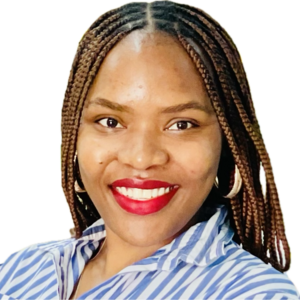
Mwandama Namonje
$7/hr
Reliable Virtual Assistant, Transcriber, and Admin Support Specialist
- Reply rate:
- -
- Availability:
- Full-time (40 hrs/wk)
- Location:
- Lusaka, Lusaka, Zambia
- Experience:
- 5 years
Transcript Sample
1
1
TRANSCRIPT SAMPLE
2
Interaction: Key Informant Interview
3
Participant Type: TB District Coordinator
4
Location: Lusaka.
5
Date of Interview: 18th October 2025
6
Start time: 11:00 Hours
7
End time: 12:00 Hours
8
Attendees: 01
9
Interviewer: Sally Brown.
10
Transcriber: Mwandama Namonje.
11
Recording Length: 60 minutes.
12
13
Label Key
14
I = Interviewer
15
P = Speaker
16
{ } = details that were changed to annonymise data.
17
xxxx = words omitted to annonymise data
18
- = breaking into the sentence by the next speaker
19
… = indicates short pauses or drawn out words
20
21
Begin Interview:
22
23
[00:00:00] I: Hello, how are you? My name is Sally Brown and I will be conducting this Key
Informant interview. Can you please briefly introduce yourself?
24
25
[00:00:00] S: My name is xxxx, and I am a healthcare assistant with five years of experience.
26
27
[00:00:00] I: What does your daily job involve?
28
Mwandama Namonje: Pharmacist | Virtual Assistant | Transcriptionist.
2
29
30
[00:00:00] S: I'm a TB program officer, so I coordinate all the activities surrounding TB in the
district.
31
32
[00:00:00] I: What does coordinating TB activities look like in the district?
-
[00:00:00] S: Okay. So coordinating TB activities looks like, first of all, I have to ensure that all
the facilities are well stocked with commodities that we are supposed to use even as we actively
find TB. So that is to say, facilities should have sputum containers, enablers for the CBVs, those
that do contact tracing, and medication has to be readily available. I have to constantly check
with the pharmacy the stock levels before we run out. We have to make an order from the
province and ensure that everything is in place so that the TB services are offered without
interruption and also without inconveniencing the patients
41
42
43
[00:00:00] I: Okay. Thank you for that. Just to get more on what you meant by enablers for
CBVs with regard to their work, what are these? Oh, okay.
-
[00:00:00] S: So on the enablers, I mean, so in the sense of doing contact tracing, CBVs, of
course, with support from different partners, for example, Missouri Company, the CBVs were
supported with umbrellas, gumboots in the rainy season, caps, and yeah, mostly those. And also
bags, the bags that they use to carry their samples and everything that they require.
49
50
51
[00:00:00] I: Okay. So how long have you been working in the district and in what capacity?
Probably you could share the different capacities you've worked under.
52
53
[00:00:00] S: Okay. So I came to Lusaka in 2018.
-
[00:00:00] I: Okay. Thank you. So with the adoption of multi-month dispensation, what
prompted the transition from the standard of delivery of treatment to Multi Month Dispensation
in the city?
-
[00:00:00] S: So what prompted the transition is, I think during the period in discussion was
COVID-19, we wanted to avoid having a lot of people coming for refills every now and then in
our little TB spaces. Yeah. So we wanted to avoid overcrowding and also just to ensure that our
clients won't have to come every now and then for refills.
Mwandama Namonje: Pharmacist | Virtual Assistant | Transcriptionist.
-
[00:00:00] I: Okay. And as a district, were there any changes that you had to make for the
program to really be compatible with how things were running in the district at the time?
-
[00:00:00] S: Yes. We had to make some adjustments. So I will speak of, let's say for our friends
who are living with HIV and they are co-infected with TB. So we made adjustments in such a
way that when they have come to the facility to collect ARVs, of which most of them are getting
for six months, we ensured we squeezed in our appointments or our timings for our dispensations
so that they don't have to frequently come back.
-
[00:00:00] I: Okay. Thank you so much. So would you please at this point share your
experiences during the transitions? Did you face any challenges or was it smooth? How did it go,
the transition from standard of care to MMD? Okay.
76
77
78
[00:00:00] S: I would say it was smooth, but again I would say it was a bit of a challenge,
because we wanted to fully adopt the MMD, giving them the drugs all at once.
79
80
81
[00:00:00] I: So where the challenge was for TB, the initial phase is two months, and after two
months we have to collect a sample to know whether they have seroconverted.
82
83
84
[00:00:00] S: So that one is non-negotiable. So despite us wanting to give them for six months
altogether, at month two they just have to come back to the facility and submit the sample.
85
86
[00:00:00] I: Okay, thank you for that. Yes, so you can continue sharing with me the challenges.
-
[00:00:00] S: Yes, so comparing that time to now, the challenges that are there are that the
CBVs, the community-based volunteers or the TB treatment supporters were supported with
stipends.
91
[00:00:00] I: That is all for today. Thank you so much for your time.
92
93
[00:00:00] S: Thank you as well, it was lovely speaking to you.
94
Mwandama Namonje: Pharmacist | Virtual Assistant | Transcriptionist.
4
95
[00:00:11] I: Sally Brown ending Key Informant Interview at 12:00pm.
Mwandama Namonje: Pharmacist | Virtual Assistant | Transcriptionist.